Revenue Optimization

Pricing that never sleeps.

Most revenue tools give you a season curve and a weekend bump. Boom gives you nine lead-time bands, twelve monthly multipliers and seven day-of-week factors — plus velocity, group and competitive signals — all working inside a floor and a ceiling you set. Then it reprices 365 nights and pushes every channel, tonight.

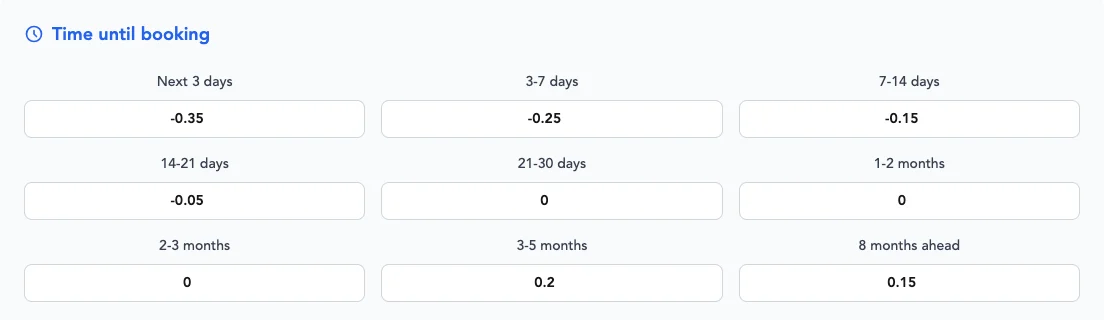
The Time until booking panel: nine lead-time bands from the next 3 days out to 8 months ahead, each with its own price factor.
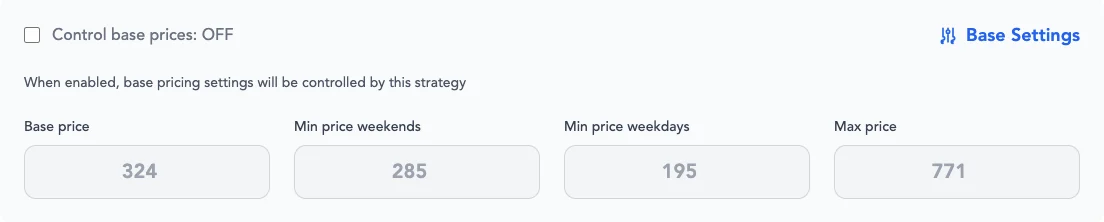
Base price, minimum weekend price, minimum weekday price and maximum price — the guardrails every factor works inside.
✦ BAM raised 3 event nights before your comp set moved
+18%
total revenue uplift
+25%
conversion rate
365
days repriced automatically
15+
pricing strategy controls
The real interface

Straight from the product.

Twelve monthly seasonality multipliers, March at +0.45 down to June at -0.2.
Twelve months, twelve multipliers. Set the shape of your year once; every night inherits it.
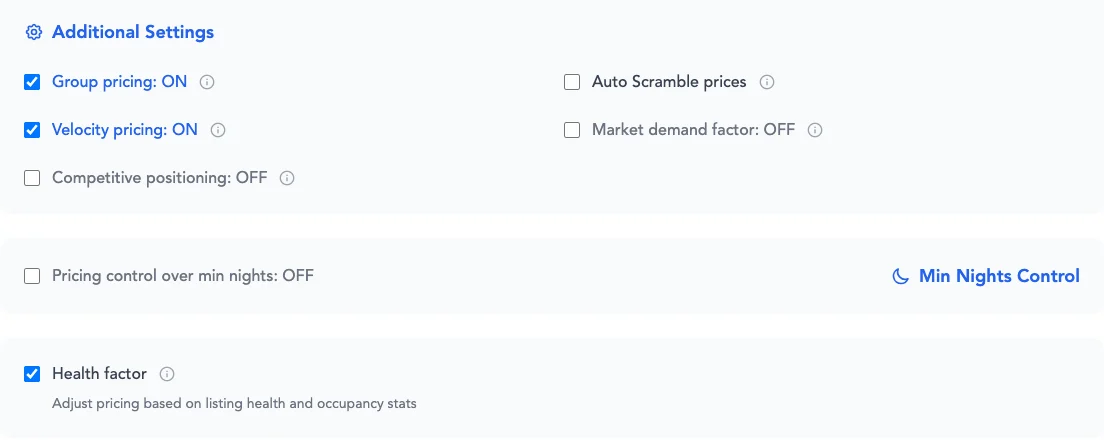
Strategy switches: group pricing, velocity pricing, competitive positioning, auto scramble, market demand factor, min-nights control and health factor.
The switches behind the rate: velocity, group, competitive positioning, market demand, min-nights control and listing health.
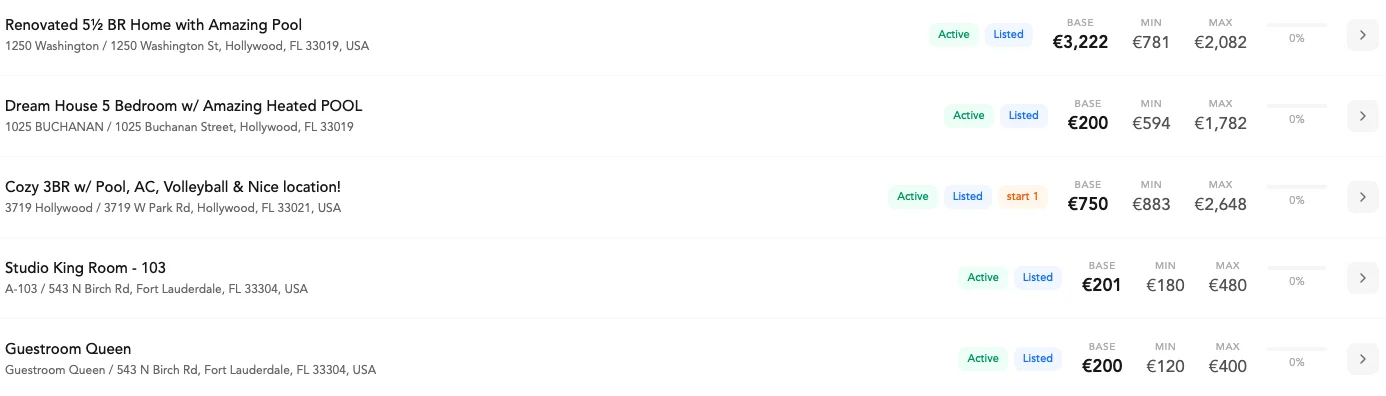
A portfolio of properties with base, minimum and maximum prices side by side.
Every property carries its own base, floor and ceiling. The engine never prices outside them.
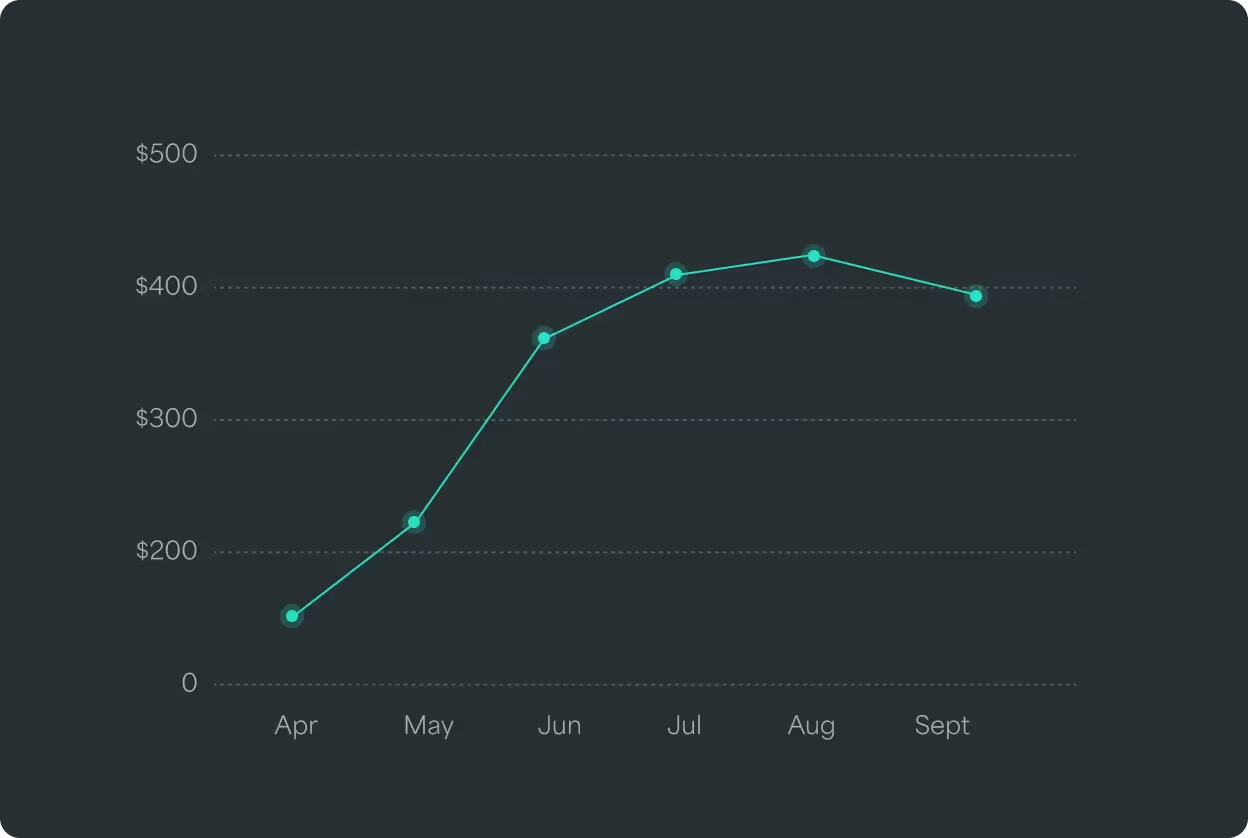
Achieved nightly rate for one listing, April to September — about $150 in spring, peaking near $420 in August.
The same listing across a season: roughly $150 a night in April, peaking near $420 in August. Nobody adjusted it by hand.

A floor and a ceiling, first

Base price, minimum weekday, minimum weekend, maximum. Nothing the engine does can price outside them — which is why operators actually leave it switched on.

Nine bands of lead time

Discount the next three days to clear inventory, hold firm at three weeks, add a premium eight months out. Boom prices the same night differently depending on how far away it is — because a booking today and a booking in March are not worth the same.

Velocity, not just calendar

Velocity pricing watches how fast a month is actually filling and pushes back. Pace ahead of plan, rates firm up. Pace behind, they ease — before the week goes empty rather than after.

Complexes priced as one

Group pricing prices a whole building together instead of letting eight identical units undercut each other. Min-nights control moves the stay length too — sometimes the fix is a two-night minimum, not a discount.

The market, and your own health

Competitive positioning and the market demand factor read outward. The health factor reads inward — listing health and occupancy stats — so a unit that is underperforming for its own reasons gets treated differently from a soft market.

Your stack, your override

Import rates from elsewhere, run length-of-stay pricing, or connect Wheelhouse. Override any night by hand whenever you like. Every change syncs across channels, messaging and operations in real time.

If I had to rate it, it’s a 10. The platform is really fast, much faster than the other guys.
Joakim Thörn — CEO, Guestly Homes — Sweden

Good questions.

Can I override the AI’s prices?+
Always. Set rules and parameters to automate adjustments, or manually override recommendations whenever you want.
How fast do rate changes reach the channels?+
Real-time rate updates are pushed to all connected channels — Airbnb, Booking.com, Vrbo, Expedia and 40+ more.

See it live on your portfolio.